The Ingenious Mechanics of Elenco Conversions
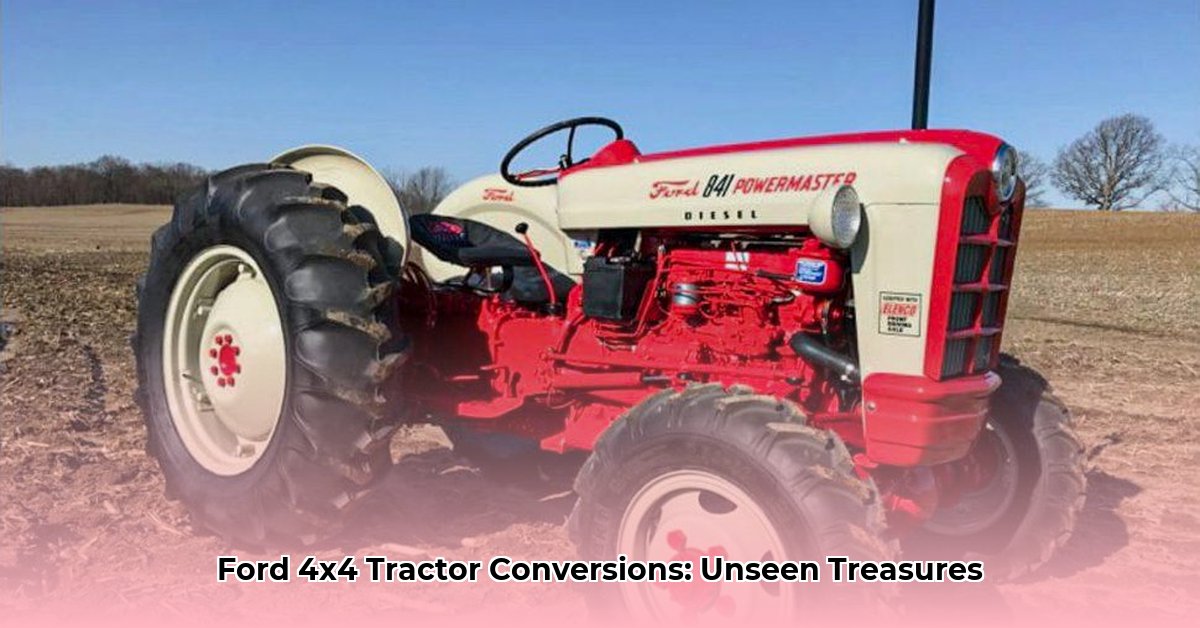
The Elenco conversion wasn't merely an upgrade; it was a resourceful transformation of standard Ford tractors into robust four-wheel-drive machines. This aftermarket modification, prevalent in the post-war era, cleverly repurposed readily available truck components to achieve remarkable off-road capability. Instead of designing entirely new parts, Elenco conversions ingeniously integrated truck axles (typically from ¾-ton or 1-ton units) to provide the foundation for the additional drive wheels. Power transfer to these front wheels was managed by a relatively simple yet effective chain-driven transfer case—a testament to the practical ingenuity of the time. This full-time four-wheel-drive system provided exceptional traction, invaluable for navigating challenging terrains and powering heavy implements. For more on Ford tractors, check out this useful resource.
How did this system handle the added strain? The design relied on the robust nature of readily-available truck components, proving surprisingly resilient in agricultural settings. But was this simple approach without its challenges? We'll explore those later.
A Post-War Agricultural Revolution: The Context of Elenco Conversions
The post-World War II period witnessed a significant agricultural shift. Farmers demanded more versatile machines to tackle increasingly varied terrains. Increased traction was paramount. The Elenco conversion offered a practical and—crucially—affordable solution. By cleverly adapting readily available truck parts, it provided increased traction at a fraction of the cost of a brand-new four-wheel-drive tractor. This accessibility democratized advanced traction technology, significantly impacting agricultural productivity and efficiency across various farming regions. What other factors fueled the popularity of these modifications? The demand for increased efficiency and the relative simplicity of the conversion played a significant role in its widespread adoption.
The Enduring Collector Appeal: Preserving a Piece of Agricultural History
Today, Elenco-converted Ford tractors are highly sought-after collector's items. Their unique history and ingenious design make them fascinating artifacts of agricultural innovation. Collectors appreciate their rugged construction, and their story serves as a testament to the ingenuity and resourcefulness of a bygone era. The restoration process itself is a significant undertaking, however. Sourcing parts is a considerable hurdle. Many collectors must get creative, often resorting to salvaging parts from older trucks or even fabricating components. It's this dedication and the inherent challenges that make owning and restoring these tractors so rewarding.
Challenges and Limitations: Examining the Trade-offs
While the Elenco conversion offered significant benefits, it wasn't without its limitations. The full-time four-wheel-drive system, while delivering superior traction, undeniably reduced fuel efficiency compared to its two-wheel-drive counterparts. The added mechanical complexity also introduced more potential points of failure, requiring more frequent maintenance. Furthermore, parts sourcing presents an ongoing challenge for owners and restorers. The limited availability of original components necessitates creative solutions and adds to the overall cost and effort of restoration. What were the most significant challenges faced by early adopters? Maintenance and parts availability were consistently cited as the biggest hurdles.
Stakeholders and Preservation: Keeping the Legacy Alive
The story of Elenco conversions isn't solely about the tractors themselves; it's about the community dedicated to preserving their legacy. Collectors meticulously restore these machines, ensuring their historical significance endures. Specialized restoration shops have developed unique expertise, often creating replacement parts to address the ongoing parts shortage. Historians study these conversions to understand their role in the evolution of agricultural technology. Agricultural engineers further analyze the designs, potentially gleaning valuable insights applicable to modern four-wheel-drive systems. The collective efforts of these stakeholders are vital in preserving this unique piece of agricultural history. How does this collaboration ensure the long-term survival of these historical machines? By combining expertise, resources, and passion, the collective effort ensures these unique tractors remain preserved for future generations.
A Risk Assessment: Understanding the Potential Issues
A thorough understanding of the potential risks associated with owning and restoring an Elenco conversion is crucial. The table below provides a summary of key risks and suggested mitigation strategies:
| Component | Risk Factor | Mitigation Strategy | Impact Level |
|---|---|---|---|
| Chain-driven Transfer Case | Parts Availability | Source vintage parts; manufacture reproductions; adapt alternatives | Medium |
| Modified Axles | Wear and Tear | Regular inspection and preventive maintenance; potential upgrades | Medium |
| Full-time 4WD System | Reduced Fuel Efficiency | Accept as inherent design trade-off; consider engine optimization | Low |
| Overall System | Increased Mechanical Complexity | Specialized expertise needed for maintenance; detailed documentation crucial | High |
Conclusion: Ingenuity and Legacy
The Elenco Ford tractor conversion stands as a testament to adaptive innovation in agricultural technology. These tractors weren't just machines; they were solutions born out of necessity and ingenuity. Their enduring appeal among collectors highlights the human element woven into technological history – the dedication, resourcefulness, and enduring spirit of those who created and continue to preserve these remarkable machines. Their story will continue to inspire those interested in farm machinery history, technological problem-solving, and the remarkable resilience of human ingenuity.